
The Monroe County Arrest-Date Report
MCSO's Inmates By Arrest Date application is the official multi-day source for arrest records. It offers a From and To date control, an optional name field, and search buttons. The query digs much deeper than the last-24-hours screen. Results can carry both current and released labels. Any totals you see reflect one moment, not a standing count.
Call it what it is: a queryable booking database. MCSO does not publish an edited weekly blotter. A result can show the booking event and the listed arresting agency. But the court file tells the rest of the story. A released label simply means one thing. The person is no longer shown as currently booked for that entry.
The official MCSO date-range source shows its From and To controls.
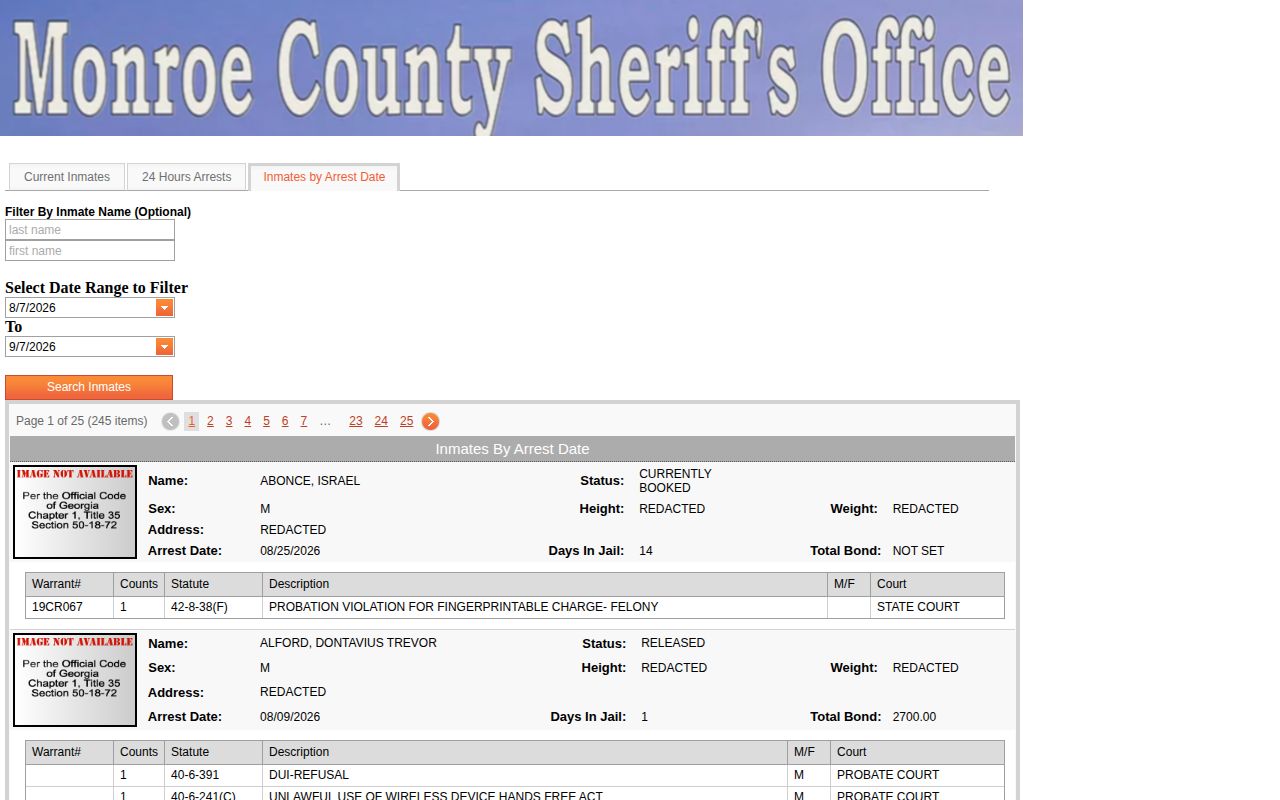
The official page shows why this source works as a multi-day report rather than a fixed weekly list.
How to Read Monroe County Arrest Reports
Start with the event date. Then use the listed agency and charge fields to route your next request. A broad date range can flood you with records, so narrow the interval when you know roughly when the booking happened.
- Open Inmates By Arrest Date on the official MCSO InteropWeb site.
- Enter a name if known, then choose From and To dates that bracket the expected arrest.
- Review possible matches and compare spelling, arrest date, arresting agency, and status.
- Open the detail and record any booking number, count, statute, description, bond, warrant, and court fields shown.
- For a booking that may be only hours old, use the Arrested Today guide to check the short window.
A shared name proves nothing. Physical and address fields stay blank or redacted in the public view. Never fill those gaps with details from an unofficial publisher.
What a Monroe County Log Entry Shows
The report draws on the same field family as the current and same-day views. Availability varies by entry, and each label serves one narrow purpose.
| Field | Meaning and limit |
|---|---|
| Name, sex, arrest date | Basic intake labels; arrest date may differ from the date of alleged conduct or court filing. |
| Custody status | Current or released state shown by the jail system, not a disposition. |
| Arresting agency | Helps route a report request to MCSO, Forsyth Police, or another listed agency. |
| Days in jail | A changing custody count, not the length of a sentence. |
| Total bond | A pretrial security figure where one appears, not a criminal fine. |
| Warrant and counts | Identifiers tied to this booking; not a live warrant-status service. |
| Statute and description | The charge as entered, which may be abbreviated or later amended. |
| Court | A court label associated with the entry, not proof of a final judgment. |
| Photo | No public booking photograph was observed under MCSO’s no-posting policy. |
A booking entry opens a legal timeline. It does not close one. For a disposition, go to the proper clerk and read the actual docket or order rather than treating the intake charge as final.
Weekend and Holiday Booking Batches
MCSO posts no weekend calendar, no weekly publication day, and no guaranteed refresh interval. The weekend rule is procedural. Widen the date range. Allow time for intake and data entry, then search again. A cluster of records appearing in one session does not mean a crime surge. Display timing is not arrest timing.
Someone booked and released over a weekend can still sit in the arrest-date results. They can remain even after the roster drops them. A late processing may surface only after your first search. For urgent custody facts, call the Monroe County Detention Center at (478) 994-7051. MCSO Central Records takes document questions at (478) 994-7717.
Local News Arrest Reports Are Selective
The Monroe County Reporter runs a recurring arrests-of-the-week feature. That is a news layer, not the full MCSO date-range database. Regional outlets like 41NBC and the Macon Telegraph cover selected investigations and multi-arrest events, with no promise of a complete daily list. Their story dates can lag the actual booking dates. The 41NBC Monroe County category illustrates event-driven regional coverage.
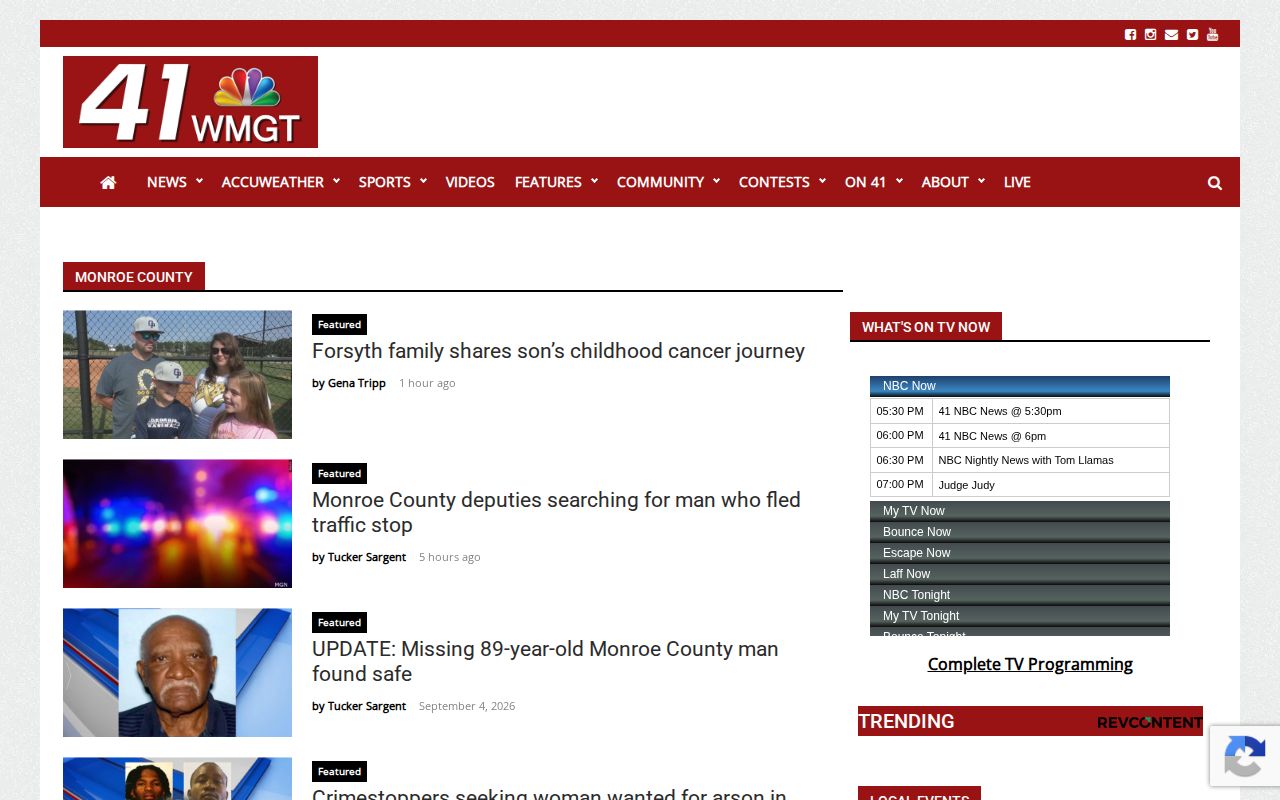
News coverage can add context to a major event. It cannot confirm that the official report is complete or that a person remains in custody. Unofficial county archives sometimes republish booking data, occasionally with photos. It can be incomplete, stale, or simply wrong. Official MCSO results come first, and the court record controls later case status. No unofficial photo appears here.
Monroe County Booking Archives and Retention
MCSO publishes no guaranteed roll-off rule for date-range results. An entry can stay queryable long after it leaves the same-day view. Web visibility is not a promise that every booking stays online for a fixed term. Georgia's retention schedule operates separately from web access.
| Government record series | Published minimum |
|---|---|
| Jail booking records | Ten years after release |
| Jail registers | Ten years after the last entry |
| Daily incarceration lists | One year |
| Inmate case files | Ten years after release |
| Criminal incident reports | Five years, with a longer rule for capital incidents |
Those retention periods govern records management, not online publication. Restricted, sealed, juvenile, victim-identifying, medical, and investigative material may be withheld or redacted. The Georgia Archives public-safety schedule is the official retention reference.
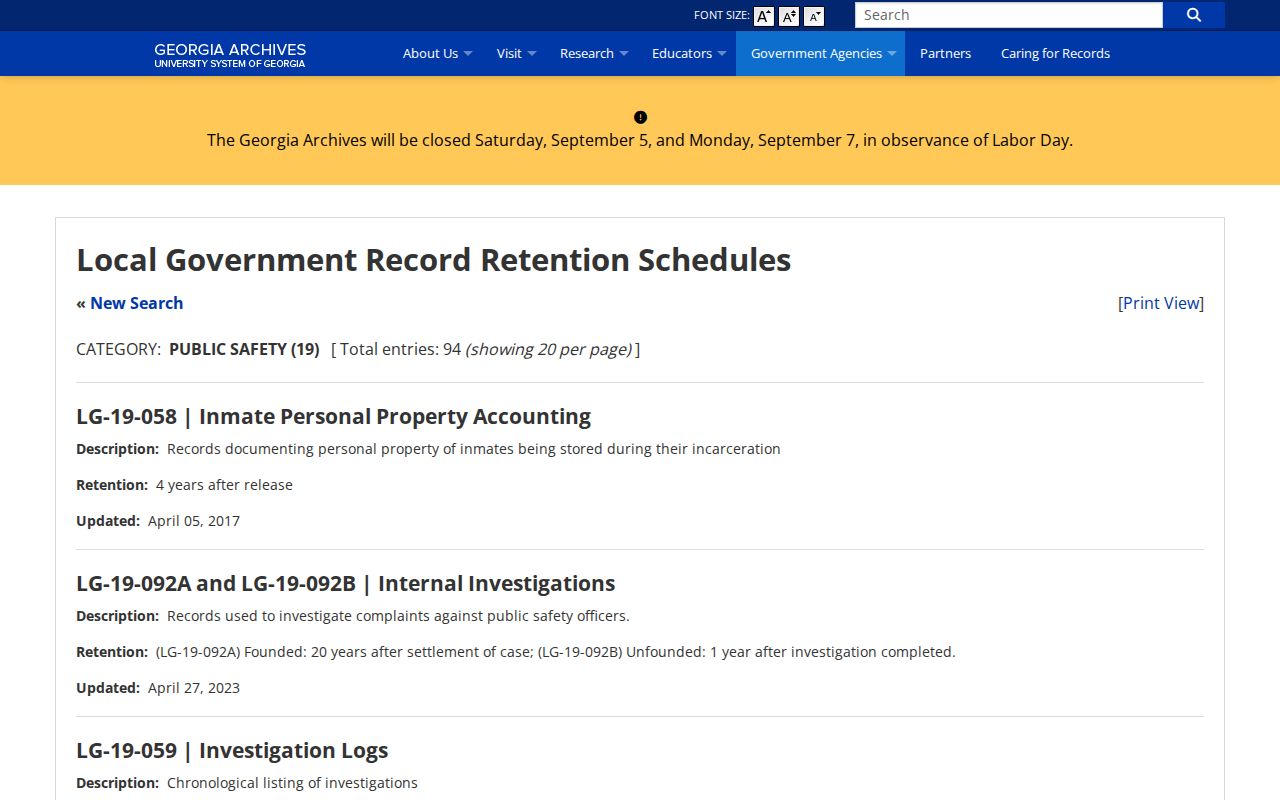
Use the schedule to identify the record series you need. MCSO remains the first custodian for any modern Monroe County booking.
Requesting an Older Monroe County Arrest Record
When a date-range search stops returning the entry, contact MCSO Central Records at records@monroecosheriffga.us, (478) 994-7717, or 145 L. Cary Bittick Drive, Forsyth, GA 31029. Give the full name. Add the approximate arrest date, the booking number if known, the listed arresting agency, and the exact document type. A Forsyth Police arrest may warrant a separate request. Ask that department for its incident or officer record.
Older material takes a different path. Georgia Archives research help and its county microfilm index can point to historical holdings. The Archives warns it often lacks county records after 1900, and a catalog card does not promise a digitized image. Newspaper archives supply context, not a certified jail register. For the eventual disposition, the court clerk is the proper route.
Note: Retention, public disclosure, and online display are different rules and should never be treated as interchangeable promises.